
Every Janmashtami since Falguni moved to the United States had begun with a phone call to Mumbai.
Her mother would ask whether she had bought flowers. Her father would remind her what time the midnight puja should begin. Someone would turn the camera toward the little Krishna jhula at home, and for a few minutes, Falguni would be transported back to the Janmashtami evenings she had grown up with.
Then the call would end, and she would be back in New Jersey.
Falguni and her husband had moved there more than a decade ago for work. What was supposed to be a few years slowly became a home, a mortgage, school schedules, familiar neighbors, and a son who knew India as somewhere he visited during summer vacations.
This year, however, there would be no video call.
Her parents were staying with them.
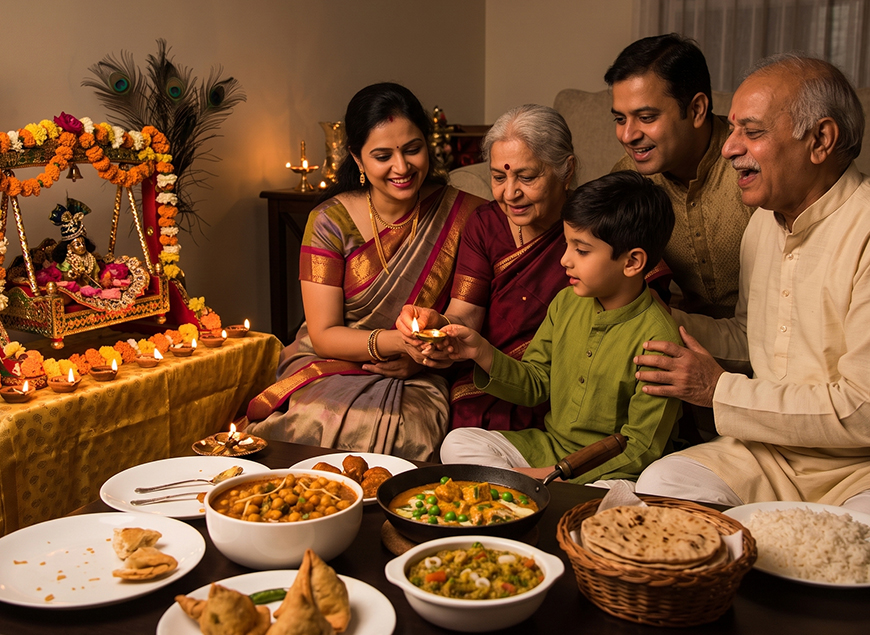
For the first time in years, three generations would celebrate Krishna Janmashtami under the same roof.
Bringing Back the Janmashtami Falguni Remembered
Falguni’s mother started planning almost immediately.
“Nothing elaborate,” she had said.
Naturally, by the afternoon of the festival, there were flowers across the dining table, peacock feathers waiting to be arranged, a tiny decorated jhula for Krishna, and Falguni’s father searching for the bhajan he insisted they had played every year when she was a child.
Neil, Falguni’s nine-year-old son, had been given charge of the jhula.
“What exactly happens at midnight?” he asked while tying a ribbon around it.
That question opened the floodgates.
His grandmother told him about Krishna’s birth. His grandfather moved quickly on to stories of butter stealing, flute playing, neighborhood celebrations, and the Dahi Handi events he remembered from his younger days.
Soon they were describing streets filled with music, temples decorated with flowers, children dressed as Krishna and Radha, families visiting one another, bhajans continuing late into the evening, and everyone waiting for midnight.
Neil had celebrated the Hindu festival before, of course. But this was the first time he was hearing what Janmashtami had looked and felt like when his mother was his age.
And Falguni suddenly realized that was exactly what she had wanted from the evening.
Not to reproduce India perfectly in suburban New Jersey.
Just to give Neil enough of it to make the tradition his own.
As The Evening Turned Festive
By sunset, the house had found its rhythm.
The little Krishna idol sat in the decorated jhula surrounded by flowers. Diyas were lit. Bhajans played in the background while everyone changed into festive clothes. Family members in India called in briefly, each insisting on seeing the decorations before asking Neil whether he was managing to stay awake until midnight.
Falguni’s mother prepared a simple Janmashtami bhog according to the customs the family followed, with fruits and other offerings kept aside for Lord Krishna.
Her parents were also observing Janmashtami fasting, so their meal would wait until after the midnight prayers.
Neil was under no such obligation.
By eight, he had begun circling the kitchen.
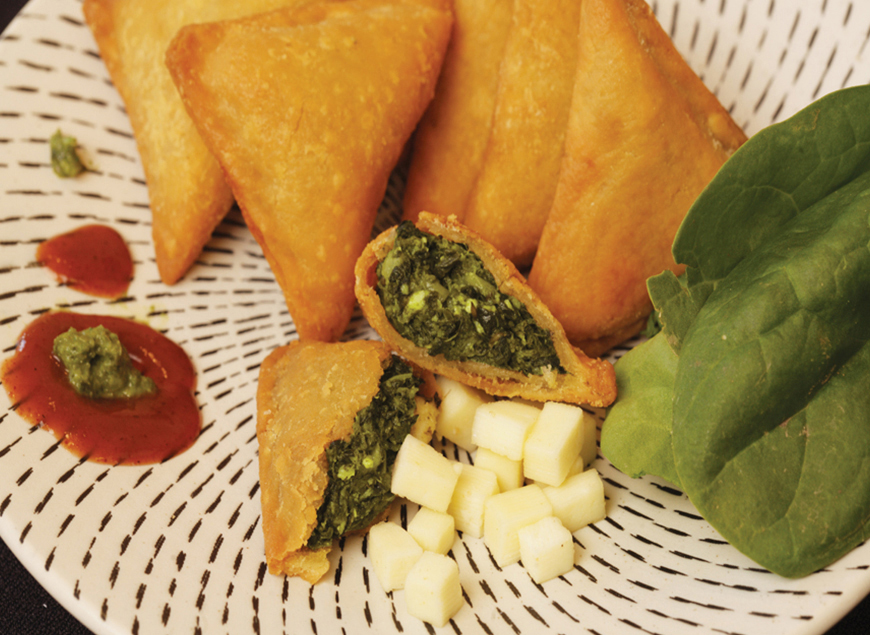
Falguni put out Paneer Tikka Samosas and Spinach and Cheese Samosas for the family members who were eating that evening. The first brought together a crisp shell and warmly spiced paneer; the second was softer and milder, with spinach and cheese inside.
There is something particularly suited to celebrations about Indian appetizers. The spices, savory fillings, and contrasting textures bring plenty of Indian flavors to the table without turning a casual evening of conversation into a formal sit-down meal.
They could be picked up between stories, passed around while people talked, and eaten without interrupting anything.
Neil reached for his second samosa.
His grandfather looked at him. “You know there is dinner later?”
“I’m preparing for it.”
Nobody could quite argue with that logic.
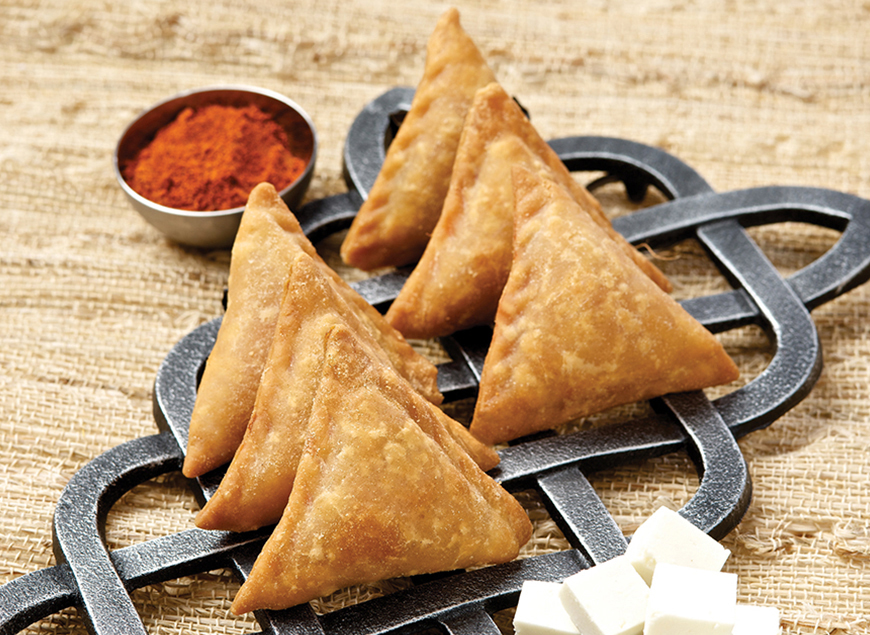
Paneer Tikka Samosas
Waiting for Midnight
The last hour passed more slowly.
The television was switched off. The lights around the shrine seemed brighter as the rest of the house grew quiet. Neil sat beside his grandmother while she explained why Krishna’s birth is celebrated at midnight and showed him how she had performed some of the various rituals since Falguni herself was a child.
There were no grand crowds outside their door. No neighborhood loudspeakers. No temple within walking distance.
But there was something comforting about the smaller celebration.
Three generations singing the same bhajan.
A grandmother correcting a grandson’s pronunciation.
A daughter realizing that she still remembered every word.
When midnight finally arrived, they gathered together for the prayers and aarti marking the birth of Krishna.
For Falguni, it became the perfect moment of the entire evening.
She had spent years worrying that living far from India might slowly thin out some of the family’s cultures and traditions. Yet here they were, on an auspicious day, with her parents teaching Neil the same stories and prayers they had once taught her.
Tradition had not disappeared.
It had simply traveled.
And Then Came Dinner
Once the prayers were complete, it was time for breaking the fast for those who had been observing it — and the rest of the family was more than ready to join them at the table.
Falguni had deliberately kept dinner comforting and familiar.
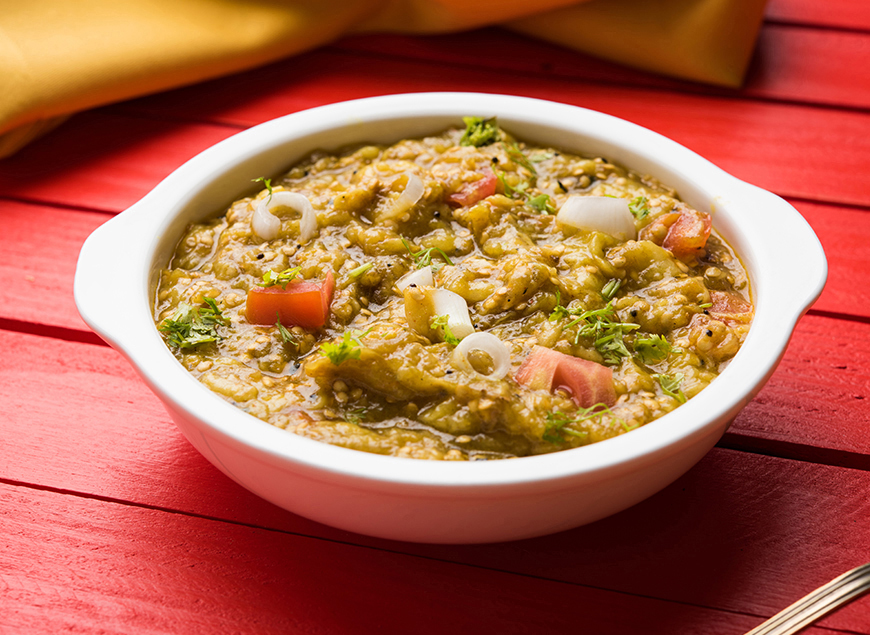
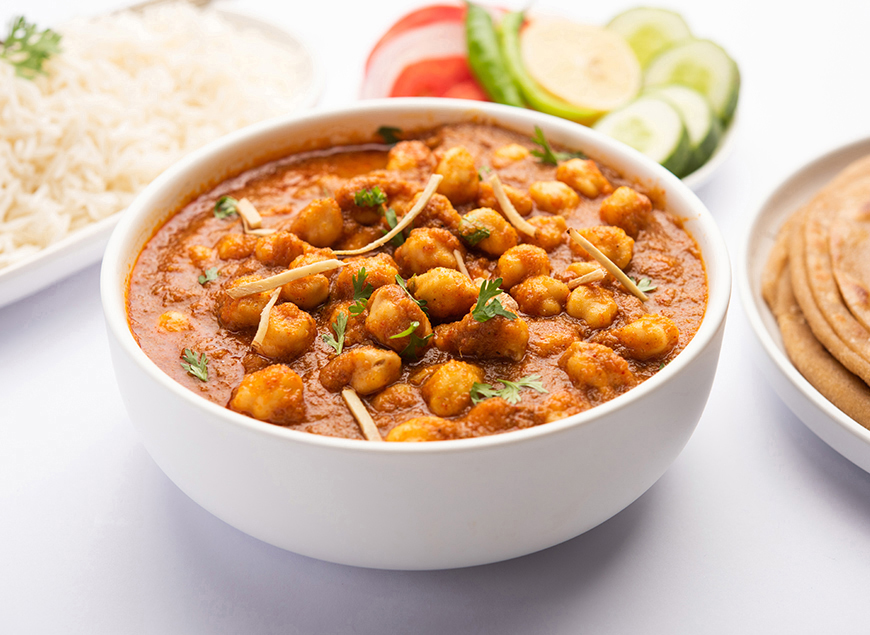
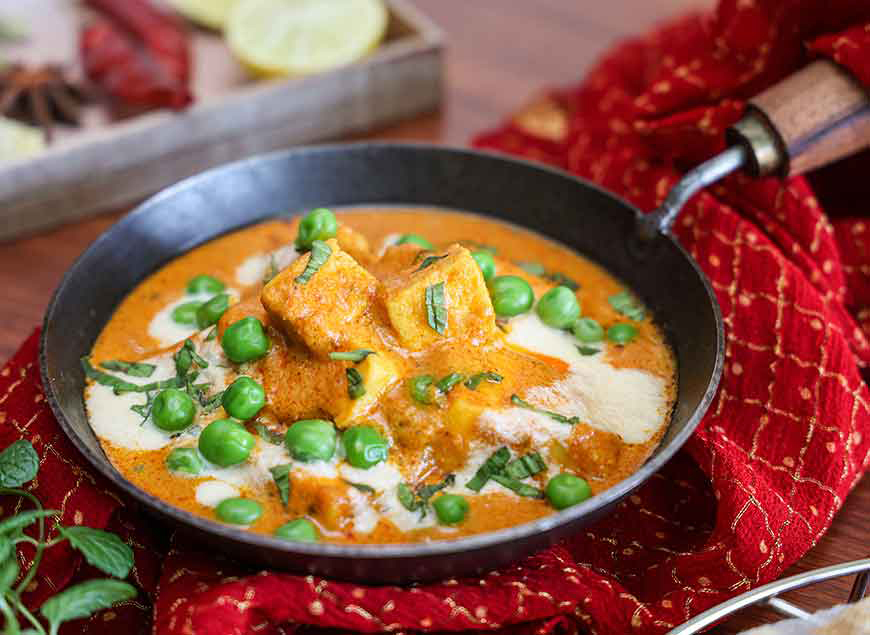
There was Chole, hearty and generously spiced; Mattar Paneer with soft paneer and peas in a rich gravy; and smoky Eggplant Bharta. Rice and warm rotis sat alongside everything, ready for passing around.
It was exactly the kind of festive meal Falguni wanted.
Nothing needed explaining. Nothing needed dressing up.
Her mother tore a piece of roti, added a little Eggplant Bharta and took a bite.
For a moment, she said nothing.
Then she smiled. “Now this feels like a festival.”
That was the thing about Janmashtami food, Falguni thought. It was never only about what sat on the plate.
It was the plate being passed to someone else.
It was her father asking for more Chole after declaring himself full.
It was Neil trying Mattar Paneer with rice and claiming it to be the best food ever.
It was everybody remaining at the table long after the meal was technically over.
The Part Nobody Plans
By one in the morning, the puja was finished. Dinner was finished. Even the tea that followed dinner was nearly finished.
Nobody seemed interested in going to bed.
Neil wanted another Krishna story.
His grandmother began telling him about Janmashtami celebrations from Falguni’s childhood, which immediately led Falguni to protest that several details were being exaggerated.
Her father disagreed.
The argument continued happily from there.
And perhaps that was the real festive spirit Falguni had been trying to bring back all along.
Not a perfect recreation of the Janmashtami she remembered from Mumbai.
Something better suited to the life they had now.
Old stories told in a New Jersey living room. A Krishna jhula decorated by a child growing up thousands of miles from his grandparents’ childhood home. Familiar food being shared after midnight. Three generations finding their own way of keeping something precious going.
Years later, Neil might forget exactly what decorations they used that night.
But Falguni hoped he would remember staying up too late, listening to his grandparents laugh, and sitting around a table nobody wanted to leave.
That was enough.
Make More Time for the Moments That Matter
A memorable Janmashtami celebration does not have to mean spending the entire evening in the kitchen.
Bring Bombay Kitchen’s Paneer Tikka Samosas, Spinach and Cheese Samosas, Chole, Mattar Paneer, and Eggplant Bharta to your festive table. Serve them alongside rice or fresh roti prepared at home and enjoy familiar Indian flavors while you spend more of the evening with the people you are celebrating with.
Find these delicious ready-to-eat dishes at a grocery store or Bombay Kitchen outlet near you.